What does the Fortier Laboratory study?
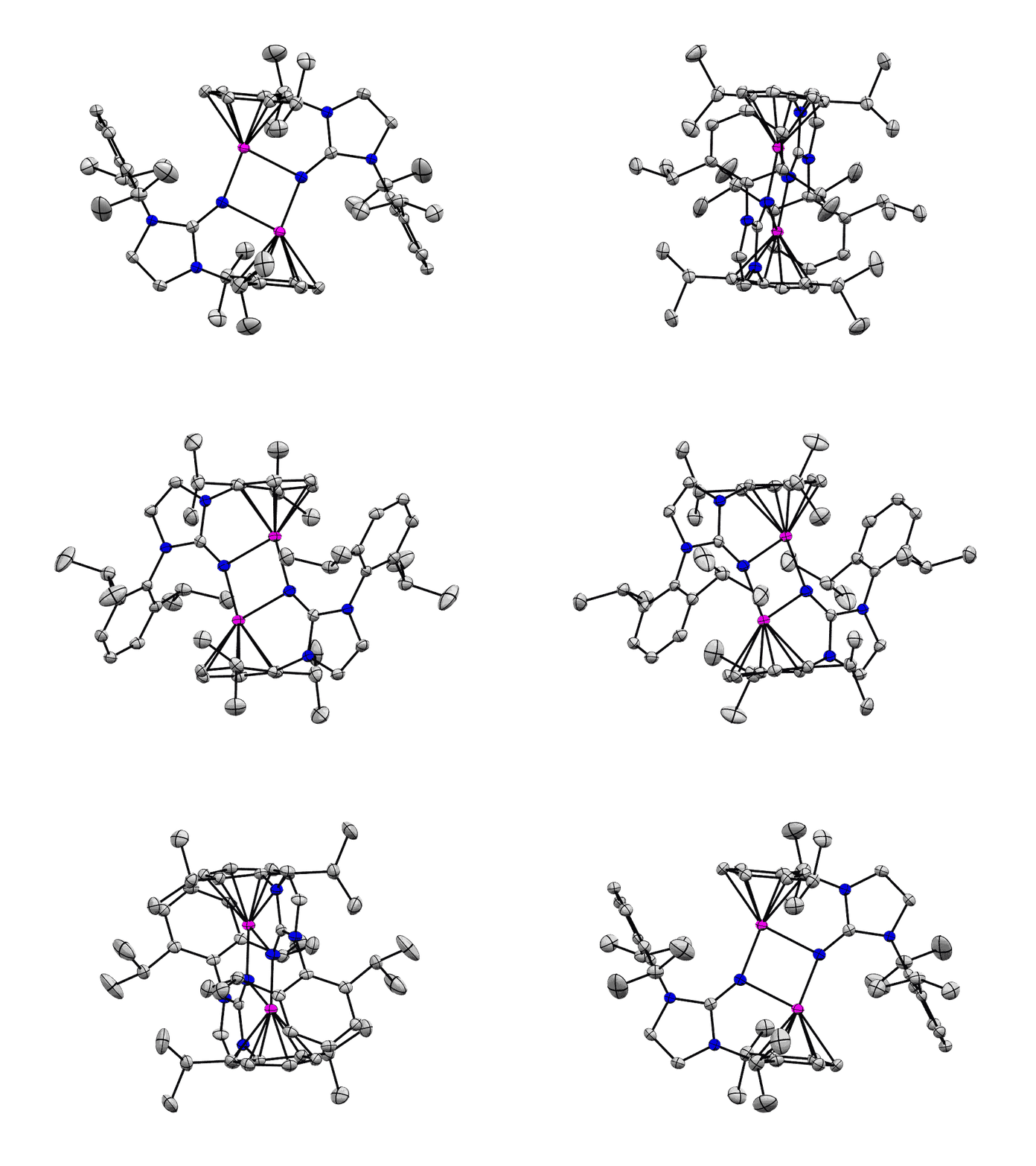
The Fortier Laboratory is a synthetic inorganic and organometallic chemistry group
at the University of Texas at El Paso. Our work focuses on making and studying metal
complexes that are difficult to access, especially compounds of highly electropositive
metals in low oxidation states or atypical coordination environments. We are
particularly interested in low-valent early transition metals, uranium and f-element
chemistry, small-molecule activation, and ligand design.
Who leads the Fortier Laboratory?
The laboratory is led by Prof. Skye Fortier, Professor of Chemistry and Biochemistry
at the University of Texas at El Paso. Prof. Fortier started the group in 2013 and was
named an Alfred P. Sloan Research Fellow in 2018.
Which metals and elements does the group work with?
Our group works with metals from across the periodic table. This includes titanium,
iron, and cobalt among the transition metals, as well as uranium and other
actinides. We are especially interested in metals that can access unusual electronic
structures and reactivity patterns.
What techniques does the lab use?
Our work is built around synthetic inorganic chemistry. We specialize in preparing,
handling, and characterizing air-sensitive, moisture-sensitive, and often highly
reactive compounds. Depending on the project, we use techniques such as glovebox and
Schlenk-line synthesis, single-crystal X-ray diffraction, NMR spectroscopy, electronic
absorption spectroscopy, magnetic measurements, electrochemistry, X-ray absorption
spectroscopy, and computational analysis.
Where is the Fortier Laboratory located?
We are located in the Department of Chemistry and Biochemistry at the University of
Texas at El Paso in El Paso, Texas.
How can I join or contact the lab?
Prospective students, postdoctoral researchers, and collaborators are welcome to
contact Prof. Fortier directly at
asfortier@utep.edu or through the website's
contact page. Students interested in joining the group
should include a brief description of their research interests and relevant
laboratory experience.