Biography
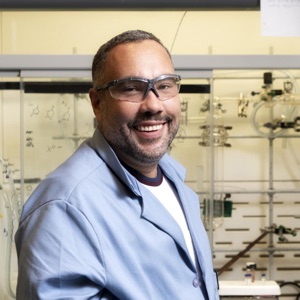
Dr. Skye Fortier was raised by his grandmother who immigrated to the United States from Mexico. He is a native of the desert Southwest, born and grown up in El Paso. As an undergraduate, Dr. Fortier attended UTEP where he received an NIH MARC (Minority Access to Research Careers) scholarship. As a MARC scholar, Dr. Fortier worked under the direction of Prof. Keith Pannell investigating the photochemically induced formation of carbon-silicon bonds utilizing 'Fp' precursors (Fp = CpFe(CO)2). Dr. Fortier also volunteered as a Peer Leader for General Chemistry and was the Vice President of Internal Affairs for the UTEP Chapter of the American Chemical Society-Student Affiliates. After graduating with a B.S. in Chemistry from UTEP in 2005, Dr. Fortier ventured out to change the hearts and minds of El Paso students. Working at Irvin High School in northeast El Paso, Dr. Fortier taught freshmen IPC (Integrated Physics and Chemistry) and junior Chemistry courses.
Beckoned by the call of Inorganic Chemistry, Dr. Fortier entered the graduate program at the University of California, Santa Barbara in 2006. At UCSB, he worked in Prof. Trevor Hayton's laboratory investigating the organometallic chemistry of uranium. In particular, his studies in the Hayton laboratory focused on the synthesis of high-valent homoleptic molecules and uranium complexes featuring metal-ligand multiple bonds. While at UCSB, Dr. Fortier received a number of awards including the Robert H. DeWolfe Graduate Teaching Award and the 2008 Outstanding Chemistry Teaching Assistant Award.
Graduating from UCSB with his Ph.D. in Fall 2011, Dr. Fortier traded in the West Coast for the Midwest in order to work as a postdoctoral researcher under the joint supervision of Profs. Kenneth Caulton and Daniel Mindiola at Indiana University (IU). As an NSF American Competitiveness in Chemistry Postdoctoral Research Fellow (ACC-F), he investigated the synthesis, reactivity, and redox chemistry of iron and cobalt complexes supported by non-innocent, redox-active 'nindigo' and pyridylpyrrolide ligand frameworks. In addition to learning how to play nice with d-block elements, Dr. Fortier also experienced his first real winters.
Not one to shy away from the sun, Dr. Fortier joined the faculty in the Department of Chemistry & Biochemistry at UTEP in 2013. Since that time, the Fortier laboratory has developed research programs spanning low-valent inorganic chemistry, uranium and f-element chemistry, and ligand design. His group investigates the reduction chemistry of highly electropositive metals, particularly early-metals and actinides, to generate unusually reactive species capable of multi-electron redox processes and unconventional bond activation. The group has also made contributions to uranium ligand multiple-bonding and arene coordination chemistry, helping to expand the known reactivity and bonding motifs of f-element complexes. Dr. Fortier was named a Sloan Research Fellow in 2018, the first recipient of this honor at UTEP.
In October 2026, Dr. Fortier received Joint Appointment status with Los Alamos National Laboratory (LANL), becoming the first UTEP faculty member to hold a Joint Appointment with LANL.
Selected Honors & Awards
- Los Alamos National Laboratory Joint Appointment (Appointee), 2026
- Gordon Research Conference on Organometallic Chemistry, Invited Speaker, July 2025
- UTEP Research & Innovation Outstanding Researcher – Mid-Career Award, 2025
- Alfred P. Sloan Research Fellowship, 2018
- American Chemical Society Petroleum Research Fund — Doctoral New Investigator Grant, 2017
- University of Texas System Science and Technology Acquisition and Retention (STARs) Award, 2013
- National Science Foundation American Competitiveness in Chemistry Postdoctoral Fellowship (ACC-F), 2011
- University of Chicago Provost's Career Enhancement Postdoctoral Scholarship, 2011 (SF declined)
- UCSB Robert H. DeWolfe Graduate Teaching Award, 2009
- UCSB Roche Graduate Teaching Award, 2008
- UCSB Department of Chemistry Outstanding Teaching Assistant Award, 2008
- UTEP NIH Minority Access to Research Careers (MARC) Scholar, 2003–2005
- American Chemical Society Scholar, 2003–2005
- Los Alamos National Laboratory, G. T. Seaborg Institute for Transactinium Science Fellow, 2004
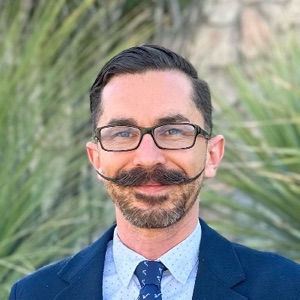 Skye Fortier
 Keith H. Pannell
 Trevor W. Hayton
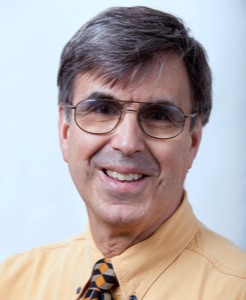 Kenneth G. Caulton